Simple Methods That Teams Actually Use
We teach project management through practices designed for teams without dedicated project managers. The focus is on visual tools, structured communication, and clear accountability.
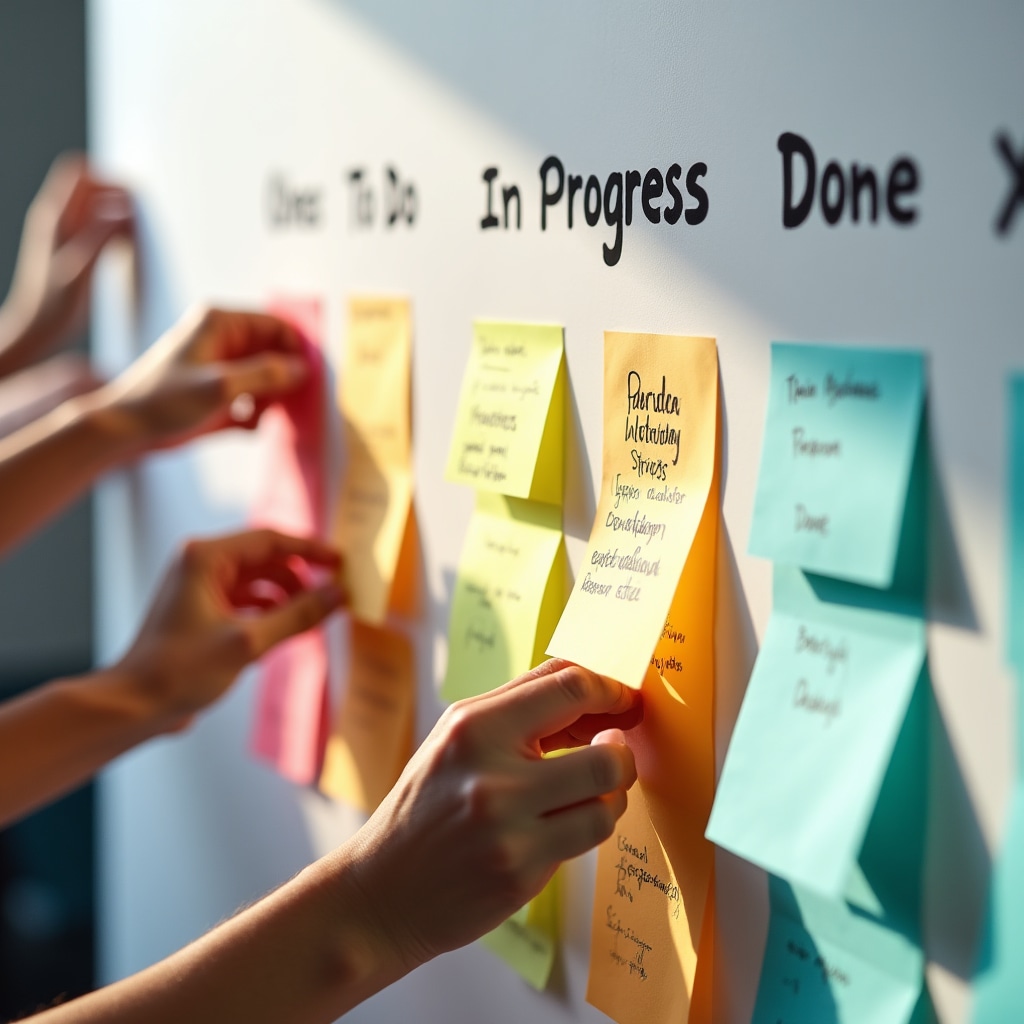
Visual Tools Over Software
Complex project management software requires training, maintenance, and often becomes abandoned after initial enthusiasm fades. We teach methods based on visual boards and simple templates.
- Kanban boards that show work status at a glance
- One-page project timelines everyone can understand
- Traffic light status dashboards for quick updates
- Physical or digital formats based on team preference
These tools work because they require minimal maintenance and provide immediate visibility. A team member can look at the board and understand project status without reading documentation or navigating software menus.
Structured Communication
Many projects fail not from lack of work but from unclear communication. We teach specific formats for meetings and updates that keep everyone aligned without creating meeting fatigue.
- 15-minute standup meetings with fixed structure
- Three-question format: What did you complete? What are you working on? What is blocking you?
- Decision logs that document who decided what and why
- Status updates that focus on exceptions, not routine progress
The goal is communication that serves the project rather than consuming time. Brief, focused, documented. No status reports that could be avoided with a glance at the visual board.

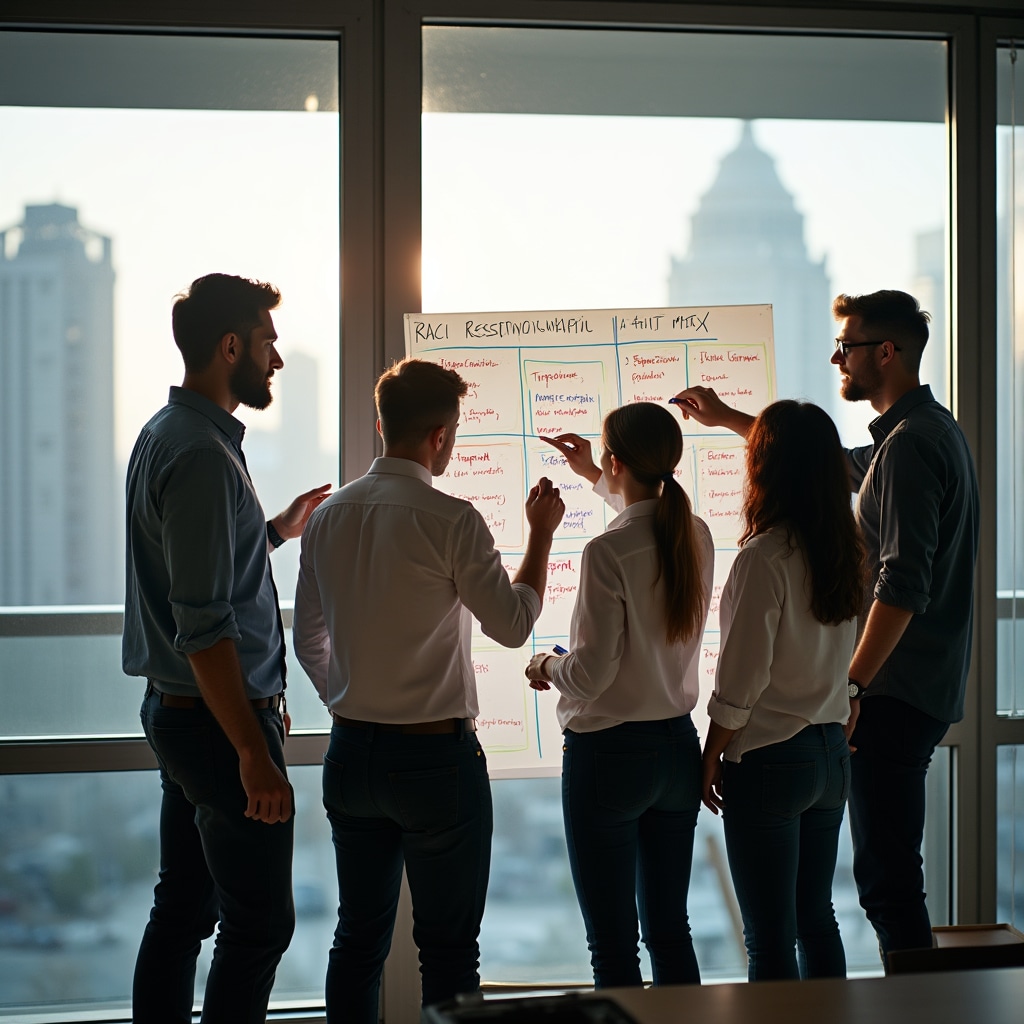
Clear Responsibility Assignment
Ambiguity about who is responsible for what is a primary cause of project failure. We teach methods for defining responsibility without creating bureaucracy.
- RACI matrices simplified for practical use
- Single point of accountability for each deliverable
- Distinction between doing work and making decisions
- Escalation paths when responsibilities conflict
The RACI framework (Responsible, Accountable, Consulted, Informed) provides structure without complexity. One person is accountable for each task outcome. Others may do the work, provide input, or need updates, but accountability remains singular.
The Five Core Practices
Every workshop teaches these fundamental practices adapted to your team context.
Define Projects Clearly
Creating project charters that fit on one page. Defining scope boundaries. Writing objectives that everyone understands the same way. Identifying stakeholders and their interests.
A well-defined project answers: What are we doing? Why are we doing it? How will we know when we are done? Who cares about the outcome?
Break Work Into Stages
Dividing projects into phases with clear deliverables. Creating work breakdown structures without excessive detail. Identifying dependencies between tasks. Estimating duration ranges rather than false precision.
Manageable stages create momentum. Completing a phase provides visible progress and natural checkpoints for course correction.
Assign Owners
Using RACI or similar frameworks to define who does what. Ensuring single-point accountability for deliverables. Distinguishing decision authority from execution responsibility. Documenting assignments visually.
When everyone is responsible, no one is responsible. Clear ownership prevents diffusion of accountability.
Track Progress
Setting up visual boards that show work status. Defining done criteria to prevent endless revision. Running brief standup meetings focused on blockers. Creating simple metrics that reveal problems early.
Tracking serves two purposes: keeping the team aligned and providing early warning when intervention is needed.
Close With Learning
Conducting structured retrospectives at project end. Documenting what worked and what did not. Capturing lessons without blame. Building organizational memory for future projects.
Projects that close without reflection waste the learning opportunity. Retrospectives turn experience into knowledge.
What We Do Not Teach
Clarity about scope is as important as clarity about content. Our workshops are not project management certification programs.
We Do Not Teach
- PMP or PRINCE2 certification preparation
- Complex project management software operation
- Formal risk management frameworks
- Earned value management or similar metrics
- Portfolio management at organizational level
- Contract management or procurement processes
Our Focus Instead
- Practical methods teams use immediately
- Visual tools requiring minimal maintenance
- Simple risk identification without formal frameworks
- Progress tracking anyone can understand
- Managing individual projects effectively
- Internal team coordination and communication
We do not pretend to replace professional project managers. We teach teams to manage their own projects when dedicated PM resources are not available.
How Learning Happens
Our workshops combine instruction with practice using real projects from participant organizations.
Brief Instruction Blocks
Concepts explained in 20-30 minute sessions. Focus on why methods work, not just how to use them. Examples from Argentine business contexts. Questions encouraged throughout.
Hands-On Practice
Exercises using actual projects from participant teams. Creating real project charters, timelines, and boards. Practicing meeting formats with immediate feedback. Building artifacts to use after the workshop.
Group Discussion
Sharing challenges and solutions across teams. Learning from peer experiences. Adapting methods to different contexts. Building shared understanding within the group.
Takeaway Resources
Templates for project charters, timelines, and status reports. Checklists for meeting facilitation. Reference guides for common situations. Digital and printable formats provided.
Ready to Improve How Your Team Manages Projects?
Schedule a workshop or discuss how we can customize our approach for your organization.